
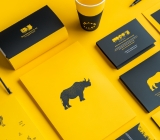




AI content platform outputs styles that clash: In 2026, is the problem the model or the platform architecture?
When AI content creation platforms produce stylistically mismatched content, in 2026 most issues do not lie with individual models but with an architecture that lacks a unified style context. A common setup is text powered by GPT or Claude, images by Midjourney or SD, audio by Suno, and video by Sora or specialized models—each generating independently, so tone, color palette, and musical mood fail to align. To address this, style anchors and post-generation validation should be handled at the business layer rather than by simply swapping in stronger models.
Why does content assembled from multiple models feel disjointed?
The main cause is not insufficient model capability but a lack of shared brand information between models. GPT's training data carries grand narratives, and Midjourney's tends toward cyberpunk aesthetics—each model has strong inherent biases. If you give only a short prompt, each model will follow its own habits.
Additionally, prompts are not linked: copy might use youthful energy, the image might use an upscale cool tone, and the music might be mellow—combined, they operate on four different logics. Based on common practice in 2026, content platforms need to first build a brand style dictionary to unify keyword standards across modalities.
- Prompts are independent and do not reference the same style dictionary;
- Multimodal reference samples are missing—models do not see what other modules have already generated;
- No post-generation automated check ensures colors, tone, and character features stay within the same range.
When styles clash, is the issue in generation or platform architecture?
A quick diagnostic: use the same brand brief to generate an image, a piece of copy, and a short video. If each works standalone but looks like they were made by different teams when placed together, the problem is usually in the platform architecture, not individual models—because the architecture does not pass a 'style baseline' as shared context to every request.
Conversely, if standalone generation already shows distorted shapes, text hallucinations, or semantic drift, the issue lies in the generation stage. In 2026, when building AI content platforms, we divide the architecture into four layers: capability (models/multimodal), business layer, carriers (website, mini-program, APP, H5), and data & risk control. Style unification is an orchestration task at the business layer.
Delivery case: a brand’s style gap found after repeated revisions
In a 2026 enterprise brand content automation project, the client asked the same product assets to generate detail page copy, social media images, voiceover scripts, and short videos. For this type of project, from kickoff to stable delivery, the typical experience range is one and a half to three months, with budget varying by content volume and model calls. Our first version connected copy, images, and video to different models. Each module passed individual acceptance, but in the integrated demo the client said it looked like four different teams had produced it. After three or four rounds of rework, we finally found that the generation requests did not share a brand keyword library or color palette.
We then spent a couple of days structuring the client’s brand manual into a style memory bank. Before each generation, we retrieved the most relevant historical cases as reference examples. In the following months, style-related revision requests dropped by around 30%. This example shows: style consistency must be designed into the platform architecture, not patched just before or after launch.
Using a 'style anchor workflow' to pull multi-model outputs into a unified line
Following enterprise project delivery habits in 2026, we place a style anchor workflow at the business layer, comprising three steps: anchoring, injecting, and validating. The advantage is that even if the backend model changes version or provider, the brand style baseline remains stable.
- Anchor: Record color codes, fonts, taboo words, target audience, and representative works from the brand manual into a structured style library. For a restaurant brand, note taste keywords, price range, and visual atmosphere; for a beauty brand, note applicable skin types and makeup details.
- Inject: Before calling the model, retrieve the 3–5 most relevant samples from the style library, and include text examples, style words, and negative words in the prompt. If reference images exist, pass them to the image or video model as anchors.
- Validate: After generation, use both models and rules for double-checking—for instance, whether the text contains banned words, whether the primary image colors are within the palette tolerance, and whether characters or product appearance in the video matches standard photos. If any fails, automatically regenerate once or send it back for manual revision.
A reminder: anchoring does not mean stuffing the entire manual into the model. Inject dynamically via template variables; otherwise, overly long input increases cost and cause the model to ignore later instructions. For typical content creation brands, the context volume in our experience is around several hundred to a couple thousand reference entries—enough.
Solution comparison: prompt control, fine-tuning, or style retrieval + RAG?
Currently, there are roughly three approaches for keeping platform outputs stylistically consistent. Their cost, timeline, and effectiveness suit different stages. Below is a comparison based on typical 2026 ranges.
- Prompt control: Fix style descriptions into templates and reference them on each call. Pros: low integration cost; change cycle typically ranges from half a day to two days—good for quick validation. Cons: unstable in complex scenarios; changing style requires rewriting templates; weaker governance.
- Model fine-tuning: Use dozens to hundreds of annotated images or a batch of texts for LoRA or fine-tuning. Pros: noticeably better output alignment. Cons: time-consuming to create datasets and requires reliable compute resources. For small-to-medium style fine-tuning tasks in 2026, cost (including data prep and training) typically ranges from a few thousand to tens of thousands of RMB; the cycle is about two weeks to a month—suitable for high-frequency, highly fixed style production pipelines.
- Style retrieval + RAG: Vectorize high-quality historical content into a database, then retrieve similar fragments as context before generation. Pros: quick upgrades; a brand redesign only requires replacing the library, not the model. Cons: you must maintain the vector database and retrieval quality. For a platform with existing multimodal capabilities, the initial build typically takes three to ten days, with extra adaptation for each new content type. In 2026 practice, this approach offers the more stable overall value for most content creation platforms.
How to judge success? Use three metrics: when same-topic multimodal content is placed together, can users recognize it as one brand at a glance? After generating multiple product batches in sequence, does style drift stay within an acceptable range? Do client revision requests point to content facts or frequently to 'trying a different feel'? If every round of rework revolves around 'feel', the style layer is not yet in place.
Applicability boundaries
Style unification does not have to be done to an extreme on every AI content platform. If your product is an inspiration generator that encourages users to edit freely, overly strong style constraints can limit the model’s creativity and reduce novelty. However, if your platform handles mass production of brand assets, brand consistency directly affects renewals—so style anchors must become a core platform capability.
- Scenarios best suited for making style anchors a base capability: brand operations services, enterprise new media matrix, batch e-commerce detail page production, and daily updates for self-media columns. In these cases, same-batch content often appears side-by-side on one screen, so brand consistency weighs heavily.
- Scenarios where strict style unification is unnecessary: entertainment-only asset tools, general template sites, and personal creative communities. Users enjoy exploring varied styles, so forced uniformity feels redundant.
Additionally, multimodal consistency must be strictly enforced when faces or product appearances are involved. Relying on text description alone is insufficient—you need to save standard reference images at the business layer and use them as generation conditions. Otherwise, the same model can look like a different person after a wardrobe change, which often becomes a delivery bottleneck in virtual try-on and product image scenarios.
FAQ
Should I switch models first when my AI content platform has style inconsistencies?
Switching models usually only alleviates the problem, not fixes it. A common approach is to first build a style library and reference samples so that different models receive the same context, then assess whether a better model is necessary.
How much latency does style retrieval + RAG add?
It typically adds a typical range of tens to hundreds of milliseconds. With proper caching and retrieving only top samples, the impact on batch generation and asynchronous tasks is minimal—almost imperceptible for non-real-time requests.
Is it enough to store the brand manual directly into a vector database?
No. Abstract words like 'high-end feel' need to be broken down into executable parameters such as color palettes, white space, and fonts, accompanied by sample images and negative prompts, so the model is effectively constrained.
How can I quickly check whether generated content has drifted in style?
First, use a classifier or vision-language model for automatic scoring. Then apply hard checks using color value ranges and keyword hit rates. If any dimension exceeds the threshold, trigger a regeneration.
What should we do if the budget is tight and we only have one or two weeks?
Start by creating style description templates and a small set of standard samples, hard-coding brand colors, taboo words, and target audiences into request calls. This resolves most of the obviously inconsistent outputs.
To decide whether your AI content creation platform needs a style consistency mechanism, run a same-topic multi-modal test: using the same brand brief—generate copy, a main image, and a short video. If the three look like they came from three different suppliers, it’s time to add style anchors at the business layer. Following 2026 enterprise delivery habits, we recommend first running prompt control plus reference samples, then evaluating RAG or fine-tuning—avoid building a complex system from the outset.
-
When a Client Uses an AI Content Platform Image for Ads, What Must Be Produced on the Spot in 2026 If a Channel Asks for the Image Source?
Date: Oct 13, 2026 Read: 53
-
AI Content Platform Connects Several LLMs but the Monthly Bill Keeps Exceeding Budget: Where Does the Money Usually Leak in 2026?
Date: Sep 16, 2026 Read: 61
-
AI Content Creation Platform: Should You Go Private in 2026? Calculate API Costs First
Date: Aug 23, 2026 Read: 105
-
How to Build an AI Content Creation Platform: A Practical Guide from Capability to Business Layer
Date: Aug 11, 2026 Read: 119
-
AI FM Radio Station Building Guide: Architecture, Selection, and Implementation Process
Date: Jul 23, 2026 Read: 147



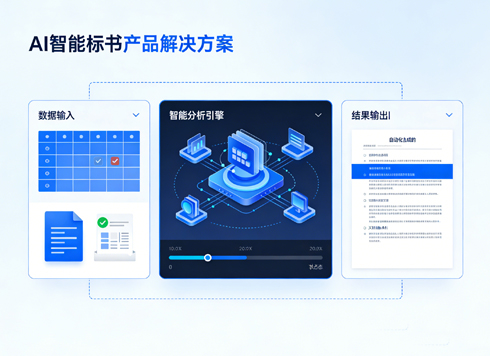
- AI Agent Project Development Pricing ¥ 9800 Cycle: 15~35 business days
- Auto Content Update (SEO/GEO/Novel) Pricing ¥ 1980 Cycle: From 3~10 business days
- AI App Development (Soft-Hard Integration) Pricing ¥ 5000 Cycle: From 10~40 business days
- AI 3D Digital Human Customization Pricing ¥ 30000 Cycle: 20~40 business days
