





How to Build an AI Content Creation Platform: A Practical Guide from Capability to Business Layer
Building an AI content creation platform typically adopts a four-layer architecture: capability layer → business layer → carrier layer → data and risk control. The core idea is to encapsulate model capabilities such as text generation, image creation, video synthesis, and voice conversation into a unified API, orchestrate specific scenarios with business logic on the upper layer, and finally present them to users through websites, mini programs, or apps. By 2026, this approach has become the mainstream starting point for project delivery.
Basic Composition and Construction Logic of an AI Content Creation Platform
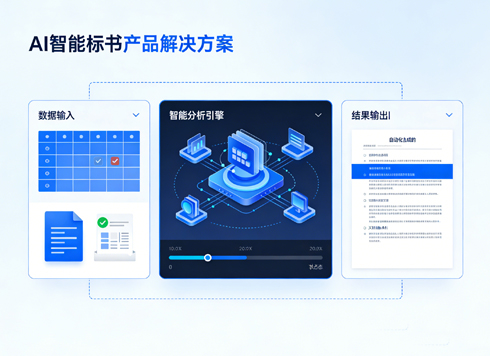
An AI content creation platform is a system that uses generative large models to provide multi-format outputs such as text, images, audio, and video for content production scenarios. Unlike single-model calls, the platform needs to integrate the strengths of multiple models and solve engineering issues such as task orchestration, context management, and output review. For example, when a user inputs a chart, the platform first calls an image recognition model to read the data, then calls a text model to generate an analysis conclusion, and finally converts it into voice-over using a speech model.
A complete platform typically includes: interaction entrance, capability scheduling, business logic, data storage, and risk control components. Capability scheduling is the core, as it determines which models requests are routed to and how multimodal results are merged. Typical capability modules include:
- General chat and copywriting (GPT-5.6, Claude Fable 5, Tongyi Qwen 3.7, etc.)
- Complex mathematical operations and logical reasoning (DeepSeek V4, etc.)
- Image recognition, exam paper analysis, chart analysis (Gemini 3.6 Flash, etc.)
- AI painting, poster and logo generation (Midjourney V8.2, etc.)
- Voice conversation and text-to-speech (speech synthesis models)
- Video analysis and AI short-video generation (Sora 2, etc.)
- Multimodal mixed Q&A across text, images, audio, and video (joint multi-model)
Why is platformization needed? Because a single model cannot cover all scenarios, and different models have their own strengths and price differences. Platformization enables scenario-based scheduling, cost optimization, and unified review, making it a common practice in AI application development in 2026.
Four-Layer Architecture and Model Selection Comparison
The four-layer architecture divides the platform into capability layer, business layer, carrier layer, and data and risk-control layer, each with independent responsibilities for easy replacement and extension. This division is quite common in AI application system development in 2026 and is suitable for teams building from 0 to 1.
Capability Layer: Model Aggregation and Multimodal Access
The capability layer addresses the question of what can be done. It needs to integrate multiple models for text, image, video, audio, logical reasoning, etc., and unify them into standard interfaces to provide stable calls for the upper layers. For example, text models can be GPT-5.6, Claude Fable 5, or Tongyi Qwen 3.7; image recognition and chart analysis can use Gemini 3.6 Flash; video generation can use Sora 2. The capability layer also needs to handle model timeouts, failure retries, token limits, and other issues.
Business Layer: Task Orchestration and User Scenarios
The business layer is responsible for what to do. It defines task flows based on user needs. For example, generating a short video may involve copywriting generation, voice-over, visual generation, and editing/compositing. The business layer needs to maintain multi-turn dialogue context, task state machines, and prompt templates for different scenarios. A high-quality business layer can greatly improve the consistency of generation results.
Carrier Layer: Website/Mini Program/APP/H5
The carrier layer determines how users access the platform. In 2026, a common practice is to prioritize H5 or mini programs for rapid validation, and then decide whether to develop an app based on data. On the technology side, the frontend can use Vue or React, the backend can use Go or Java-based microservices, and the API gateway handles authentication and rate limiting.
Data and Risk Control: Logging, Review, Cost
Data and risk control are the guarantee for the long-term operation of the platform. It is necessary to collect user behavior and generation logs for quality assessment and model fine-tuning. On the risk-control front, there should be sensitive-word filtering, violation content blocking, copyright detection, and custom review interfaces. Cost monitoring should also be an independent module to track model token consumption per request and prevent cost overruns.
There are three common approaches for model integration, each suited to different stages and investment levels. API calls (e.g., OpenAI, Tongyi, DeepSeek) are fast to develop and pay-as-you-go, suitable for initial validation; private deployment (e.g., open-source models) keeps data within the intranet and offers strong controllability, but requires GPU resources and an operations team; a hybrid mode routes sensitive data through private deployment and non-sensitive data through APIs, balancing cost and security. The comparison dimensions of the three approaches are as follows:
- Development cycle: API calls take about 1-2 weeks to integrate; private deployment requires 2-4 weeks for joint debugging; hybrid mode requires additional design for routing rules.
- Cost: API calls are pay-as-you-go, with a single generation cost ranging from a few cents to a few dimes; private deployment requires an initial investment of hundreds of thousands of yuan for GPU servers, but the long-term marginal cost is lower; hybrid mode has a moderate initial investment.
- Data security: API calls are subject to service provider policies; private deployment is fully controllable; hybrid mode requires careful design for data splitting.
- Maintenance complexity: API is simplest; private deployment requires regular model updates and hardware maintenance; hybrid mode requires two sets of monitoring.
Selection recommendation for 2026: If the business scenario involves a large amount of user privacy data, prioritize private deployment; if you seek rapid launch and low data sensitivity, prioritize API calls; if you have a limited budget but some data is sensitive, choose the hybrid mode. For example, an AI content creation platform for educational institutions can use private cascaded recognition for student image data, while text generation calls general APIs to reduce processing latency.
Implementation Process and Acceptance Criteria
Platform implementation should proceed in stages to avoid pursuing completeness from the start. We recommend the Five-Step Implementation Method: requirement analysis, capability selection, architecture construction, joint debugging and testing, and launch and iteration. Each step has clear deliverables and evaluation criteria.
- Requirement Analysis: Clarify target users, core usage scenarios, and expected content formats. Evaluation criteria: Output a scenario list with clear priorities.
- Capability Selection: Choose the most suitable model or service for each scenario and create a capability matrix. Evaluation criteria: Each content format has corresponding models and alternatives.
- Architecture Construction: Build the code project based on the four-layer architecture and define API interface specifications. Evaluation criteria: Capability layer interfaces can be called independently without depending on the business layer.
- Joint Debugging and Testing: Configure prompts, test multimodal collaboration, and verify review mechanisms. Evaluation criteria: The generation success rate for core scenarios is no less than 90%, and the error rate is within an acceptable range.
- Launch and Iteration: Conduct canary releases, collect real feedback, and continuously optimize model routing and prompt templates. Evaluation criteria: Metrics such as retention rate, repurchase rate, or task completion rate continue to improve.
During acceptance, you should not focus only on the model itself, but also examine the overall performance of the platform. Key dimensions include: functional completeness (whether all declared capabilities are covered), generation quality (text reasonableness, image clarity), performance (common request response time within 2 seconds), security (sensitive-word blocking rate and manual review rate), and scalability (the cost of changes to add new models or scenarios).
Applicable Scenarios and Boundaries
AI content creation platforms are suitable for scenarios with high content demand, high repetition, and sufficient tolerance for errors. Typical applicable users include: online marketing teams (batch generation of copy and posters), self-media operators (quick production of video scripts), education and training institutions (creating exam analysis and courseware), and corporate internal training departments (generating explanatory materials), among others.
The following situations do not require building a full-featured platform: if you only have a single content need (e.g., AI drawing only), you can directly use existing tools; scenarios with extremely high real-time requirements (e.g., real-time voice conversation) need specialized underlying infrastructure; and fields involving core decisions with extremely high error costs (e.g., medical diagnosis recommendations) require human review as a fallback. A platform is not necessarily better when it is larger; the pragmatic choice in 2026 is to first limit it to a specific vertical scenario.
Action Guide: To start building an AI content creation platform, it is recommended to first establish a minimal viable product (MVP), primarily using API calls, based on the four-layer architecture, and focus on running through one high-frequency scenario. After launch, gradually add multimodal capabilities based on user feedback. If deep customization or private deployment is needed, consider partnering with teams experienced in AI application development, such as Xiyue Company, which has multiple project practices in the implementation of content creation platforms. Be sure to define review and cost-control mechanisms early in the project to avoid the dilemma of being able to generate but not being usable.
Frequently Asked Questions
How to choose a base model?
By content type: for text, prioritize GPT-5.6 or Claude Fable 5; for mathematical logic, choose DeepSeek V4; for image recognition, use Gemini 3.6 Flash; for drawing, use Midjourney V8.2. The specific choice should also consider budget and response speed testing.
How much does it cost to build a platform?
In the API-call mode, you pay per use, and the initial development cost is mainly labor. It can be launched in about a month, with a total cost of tens of thousands of yuan; private deployment requires GPU servers and other equipment, with an initial investment of hundreds of thousands of yuan, suitable for teams with sufficient budgets.
How to handle hallucinations and violations in AI-generated content?
Use a three-layer mechanism: prompt constraints + output validation + manual sampling. Set preset keyword filtering for high-risk content, add fact-checking for generated opinions, and use an independent review API or human review flow.
How to choose between private deployment and API calls?
Data sensitivity is the core factor. If keeping data within the intranet is a hard requirement, choose private deployment; if you pursue rapid iteration and data is not sensitive, choose API. You can also use a hybrid mode to route sensitive tasks to private models.
How to accept the platform before launch?
Evaluate according to five dimensions: functional completeness, generation quality, performance, security, and scalability. Set minimum pass criteria for each dimension. For example: core scenario generation success rate no less than 90%, response time less than 2 seconds, and sensitive-word blocking rate greater than 95%.
-
When a Client Uses an AI Content Platform Image for Ads, What Must Be Produced on the Spot in 2026 If a Channel Asks for the Image Source?
Date: Oct 13, 2026 Read: 16
-
AI Content Platform Connects Several LLMs but the Monthly Bill Keeps Exceeding Budget: Where Does the Money Usually Leak in 2026?
Date: Sep 16, 2026 Read: 47
-
AI content platform outputs styles that clash: In 2026, is the problem the model or the platform architecture?
Date: Sep 4, 2026 Read: 66
-
AI Content Creation Platform: Should You Go Private in 2026? Calculate API Costs First
Date: Aug 23, 2026 Read: 92
-
AI Agent/Dialogue System Development Landing Guide: Model Selection, Four-Layer Architecture, and Data Risk Control
Date: Aug 9, 2026 Read: 94



- AI Agent Project Development Pricing ¥ 9800 Cycle: 15~35 business days
- Auto Content Update (SEO/GEO/Novel) Pricing ¥ 1980 Cycle: From 3~10 business days
- AI App Development (Soft-Hard Integration) Pricing ¥ 5000 Cycle: From 10~40 business days
- AI 3D Digital Human Customization Pricing ¥ 30000 Cycle: 20~40 business days
