




AI quant backtest annualized returns look great, but shrink in live trading in 2026 — is the first thing to check data or trading costs?
Bottom line first: when an AI quant backtest shows attractive annualized returns but shrinks after going live in 2026, the usual troubleshooting order is to check data conventions first, then trading costs, and only last to suspect model capability. Models such as GPT, Claude, Tongyi, and DeepSeek mainly handle strategy code generation, earnings-call sentiment interpretation, and factor explanations here; they do not handle price adjustment, limit-up/limit-down, or slippage for you. Aligning backtest assumptions with live trading usually narrows the gap significantly, while simply swapping models often cannot fill the hole left by missing cost modeling.
Backtest looks good, live trading shrinks: usually two sets of assumptions are not aligned
Backtesting replays fixed rules on historical data, while live trading faces matching latency, order-book depth, and capital constraints. In 2026, a typical pitfall in AI finance or quant tools is: the strategy logic itself is fine, but the backtest assumes execution at the same day's closing price, while live trading executes at the next day's open. Once the price is off, a gap of several percentage points to more than ten percentage points in annualized return is not rare.
To judge whether the gap falls within a reasonable range, start with turnover: for low-frequency strategies such as monthly rebalancing, a gap of a few percentage points in annualized return between backtest and live trading is generally still acceptable; for high-frequency strategies with intraday or next-day rebalancing, the gap can easily be amplified by fees and slippage to more than ten percentage points or even more. This is only an experience range; check it item by item based on the instrument, fee rates, and liquidity.
- Data-related shrinkage: inconsistent adjustment methods before and after, suspensions and limit-up/limit-down not excluded, and financial report data using versions that had not been published at the time.
- Cost-related shrinkage: commissions, stamp duty, market impact, and slippage not modeled, or only one-sided fee rates counted.
- Model-related shrinkage: generated strategy code contains look-ahead functions or data leakage, artificially inflating the backtest net value.
Four-layer alignment method: check from capability layer down to data and risk control layer
Breaking an AI quant system into four layers is meant to give troubleshooting an order: errors in lower layers are more likely to masquerade as the model not being good enough. Checking top-down first, then deciding whether to change models, can save a lot of pointless parameter tuning and re-runs.
- Capability layer: use large models for strategy code generation, factor explanation, or research report summarization; require structured output and manually audit signal timing.
- Business layer: write down buy conditions, rebalancing frequency, position rules, and stop conditions so the rules can be replayed and repeated by a person in one sentence.
- Carrier layer: website, mini-program, APP, or H5 displays the net value curve and rebalancing records; the data should come from the same backtest output to avoid front-end recalculation causing mismatches.
- Data and risk control layer: unify adjustment conventions, complete suspension and delisting handling, and make fee rates, slippage, and maximum drawdown configurable parameters.
The pass line for each layer can be set like this: the capability layer leaves no unaudited generated code, the business layer rules can be repeated by a person, the carrier layer numbers match the backend, and the data and risk control layer can be re-run by changing one cost parameter. Meet these four, and when shrinkage occurs you can basically locate the specific layer instead of vaguely saying AI does not work.
Data conventions or trading costs: use one comparison set to tell the direction first
A common approach in 2026 is to first run the logic through with daily-level data, then decide whether to move to minute-level. The two types of shrinkage look different: data-convention problems often show up as an unusually smooth, unusually beautiful stretch of history; trading-cost problems show up as higher turnover leading to a larger gap between backtest and live trading.
- Daily-level backtest: market data cost experience range is a few hundred to a few thousand yuan per year, suitable for validating logic and low-frequency rebalancing, with the focus on adjustment and suspension handling.
- Minute-level or tick-by-tick backtest: data and storage cost experience range is a few thousand to tens of thousands of yuan per year, more suitable for medium-to-high frequency, and more sensitive to matching assumptions.
- Cost parameter settings: write commissions, stamp duty, and market impact as parameters, and set different slippage for different instruments based on the experience range; do not use one number for the whole market.
- Controlled comparison: run the same strategy in two versions, with and without costs; the difference is the cost contribution. If the difference exceeds 30% of the strategy's annualized return, it usually means the cost convention needs to be re-estimated.
Delivery scene: only daily data, a two-week demo — where does rework get stuck?
A common constraint in projects: the requester asks for a demonstrable AI quant dashboard within two weeks, historical data is only daily-level, and order-book data is not provided. Following common delivery practice, use a large model to generate the strategy skeleton first, then manually add adjustment, suspension, and fee-rate parameters, with slippage set as experience values by turnover buckets. The cycle from skeleton to reproducible backtest typically falls in the two-to-six-week experience range.
The sticking point often appears in the first backtest version: because stamp duty and slippage were not deducted, the net value curve looks much better than live trading; after the requester tries it with small capital, consecutive drawdowns appear, forcing rework to rerun the data and add the cost model, costing an extra one to two weeks. This rework is usually not in the original schedule, and the cost is a disrupted demo rhythm and lower trust in the results, so it should be stated clearly as a risk before work starts.
FAQ
How much difference between AI quant backtest and live trading is normal?
For low-turnover strategies, a difference of a few percentage points in annualized return is common; for high-turnover strategies, fees and slippage can cause a difference of more than ten percentage points or even more, depending on fee rates and instruments. The higher the turnover, the more safety margin you need.
Which types of errors in large-model-generated strategy code make backtests artificially high?
Look-ahead functions and data leakage are typical: the model may reference data that only becomes available after the close of the day, or use full-sample statistics for normalization. You must check signal timing and data visibility line by line.
Can I still do AI quant without Level-2 order-book data?
Yes. Lower the strategy to daily or weekly level, use volume and turnover as liquidity proxies, and set slippage parameters more conservatively; high-frequency strategies that depend on order-book data are not recommended when data is missing.
If the backtest shrinks, do I have to change models?
Most of the time, no. First check the adjustment conventions, suspension handling, and fee-rate parameters, then inspect the code for look-ahead functions; if gaps remain after alignment, then consider changing the model or data source.
Roughly how much does an individual spend on AI quant per month?
Based on common practice in 2026, model API costs fall in the experience range of tens to a few hundred yuan per month, market data costs a few hundred to a few thousand yuan per year, and a self-built backtest server adds compute costs on top. It is advisable to start with a monthly trial before deciding.
Applicable scenarios and boundaries
Suitable for: individuals or small teams validating low-frequency, clearly defined strategies, and enterprises building internal investment research support dashboards, using large models to speed up code and research report processing. Not suitable for: treating AI quant as a one-click tool for producing live trading returns, or connecting directly to live trading capital without compliance and risk control capabilities; businesses involving investment advice still need to check against local regulatory requirements, and this article does not constitute investment advice.
Another boundary is data: when you only have daily data, do not force minute-level strategy parameters; when strategy capital capacity is small, it is not worth purchasing expensive high-frequency data just for backtesting. A qualified deliverable usually states the adjustment method, execution assumptions, and fee rates clearly, and can be reproduced by a third party under the same set of parameters; conversely, a report that only gives one net value curve should raise questions about credibility.
Action guide: first make adjustment conventions, fee rates, and slippage configurable items, check layer by layer using the four-layer alignment method, and then decide whether to change models. Based on 2026 project delivery practice, a reproducible backtest is more useful as a reference than a good-looking net value curve. The costs and gaps above are all experience ranges, for technical evaluation only, and do not constitute investment advice; for real capital or licensed business, please rely on compliance assessments and official documentation.

-
AI Audiobook Narration Reads “银行” as “行走”: How Much Can a Pronunciation Lexicon Actually Fix in 2026?
Date: Oct 2, 2026 Read: 1
-
A client suddenly wants two lines changed in an AI short drama, and you don't want to regenerate the whole episode from existing shots—in 2026, should you split shots into storage first or add version records first?
Date: Oct 1, 2026 Read: 4
-
AI image generation takes one or two minutes and users quit before it finishes: in 2026, should you add GPUs first or make waiting a feature first?
Date: Sep 30, 2026 Read: 8
-
If the boss does not want to record more, what will fall short when a digital human avatar goes live with only two minutes of footage in 2026?
Date: Sep 28, 2026 Read: 21
-
When AI agents keep getting tool parameters wrong, should you unify field definitions or add a validation layer first in 2026?
Date: Sep 27, 2026 Read: 19



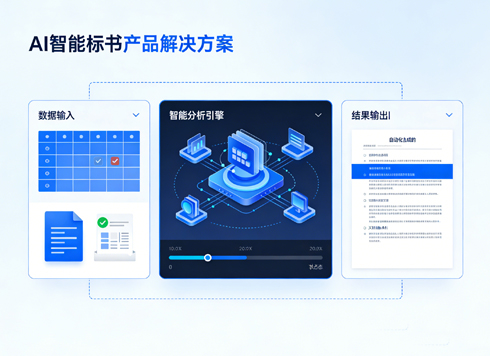
- AI Agent Project Development Pricing ¥ 9800 Cycle: 15~35 business days
- Auto Content Update (SEO/GEO/Novel) Pricing ¥ 1980 Cycle: From 3~10 business days
- AI App Development (Soft-Hard Integration) Pricing ¥ 5000 Cycle: From 10~40 business days
- AI 3D Digital Human Customization Pricing ¥ 30000 Cycle: 20~40 business days
