




2026 AI E-commerce Marketing: API vs. Private Deployment – What's the Difference? Budget and Review Before Launch
In 2026, most AI e-commerce marketing projects do not need private deployment from the start. The common practice is to first use APIs to call mainstream models for product copy, marketing images, intelligent customer service, user profile analysis, and other modules. Then, when call volume stabilizes and data compliance requirements become stricter, consider private or hybrid deployment. The core modules include the model capability layer, business logic layer, presentation carrier layer, and data risk-control layer — all four are indispensable. The three things that often block projects before launch are hallucinated content, platform review, and call costs.
AI E-commerce Marketing System: Four Core Layers
We break AI e-commerce marketing into four layers so each layer can be independently replaced and upgraded. The capability layer determines "what it can do," the business layer determines "how to make it useful," the carrier layer determines "where users use it," and the data and risk-control layer determines "whether it can be sustained." This approach can be called the four-layer landing method, with the key being to decouple model capabilities from business logic, avoiding major code changes when switching models or adding review processes later.
- Capability layer: Connect to models such as GPT, Claude, Gemini, Qwen, DeepSeek, etc., to handle text, image, voice, and other tasks. The key here is to select models by scenario — for example, use a text model for product copy and an image model for marketing posters.
- Business layer: Encapsulate model capabilities into specific functions, including marketing content generation, intelligent customer service, user segmentation, and ad placement strategies. At this step, define inputs, outputs, and trigger conditions.
- Carrier layer: The product form presented to users, such as H5, mini-program, website, or APP. The carrier determines interaction methods and also affects review and compliance requirements.
- Data and risk-control layer: Collect user feedback, control call costs, filter hallucinated content, and respond to platform reviews. Without this layer, an AI system can easily go out of control.
Why this breakdown? In practice, many projects hardcode model capabilities directly into business code, forcing rewrites when models change or review is added. With layering, capabilities and business are decoupled, significantly reducing upgrade and replacement costs.
API Calls vs. Private Deployment: What Actually Differs in 2026?
This is the most frequently asked question at project kickoff. Based on 2026 delivery practices, API calls and private deployment differ significantly in cost, timeline, compliance, and operations. The comparison below is based on experience ranges from multiple projects and can serve as a starting point for your budget table.
- Upfront cost: API plans are paid monthly, with an experience range of a few thousand to tens of thousands of yuan; private deployment requires purchasing or renting GPU servers, with typical starting costs ranging from tens of thousands to hundreds of thousands of yuan.
- Launch timeline: API integration typically takes 1–2 weeks to run after debugging models and interfaces; private deployment requires environment preparation, model testing, and capacity planning, ranging from at least 1 month to several months.
- Data compliance: When user privacy or sensitive business data is involved, private deployment is safer; if you are only generating public marketing materials, API calls are sufficient.
- Operations burden: APIs are maintained by cloud providers; private deployment requires managing model updates, concurrency scaling, and failure recovery yourself.
- Scalability: APIs can easily adjust budgets as scale grows; private deployment requires provisioning ample compute capacity in advance, otherwise it may lag during peak hours.
A judgment that can be quoted independently: If monthly call volume is below 100,000, private deployment is usually not cost-effective; if it exceeds one million and the business depends on stable concurrency, private or hybrid deployment becomes viable. Note that this is an experience range; specifics depend on model type and hardware costs.
Three Common Bottlenecks Before Launch: Hallucination, Review, Cost
Hallucination: Generated Content Inconsistent with Facts
When AI generates product descriptions, it may fabricate features, ingredients, or parameters that do not exist. The solution is to connect the model to a knowledge base (RAG), provide real product information as context, and apply keyword filtering plus manual sampling to outputs. The acceptance criteria is keeping the error rate within an acceptable business range — for example, at most 1 obvious error per 100 pieces of copy.
Review: Platform Restrictions on Marketing Content
E-commerce platforms impose strict restrictions on terms like "lowest price," "pure natural," or "cure rate." A common practice in 2026 is to first pass generated content through a review API, then build an industry blacklist lexicon. One project was rejected for using "lowest price on the entire web," and after revising the copy and republishing, it took an additional two days.
Cost: Call Expenses Exceed Expectations
Cost is not just the API unit price; multimodal costs for images, videos, etc. also accumulate. The approach is to set monthly budget alerts, switch low-frequency tasks to cheaper models, and cache or batch-process high-frequency tasks. Experience range: AI call costs typically account for 5%–15% of a marketing project's operational costs.
Applicable Scenarios and Boundaries: Which Projects Must Go Private, and Which Should Avoid It
Cases where private deployment is mandatory include: processing private data such as user phone numbers and chat logs; needing to fine-tune the model for a specific industry; clients being government or state-owned enterprises that require data to remain on-premises; and long-term high-frequency calls with existing GPU resources.
Cases where private deployment is not recommended include: the team lacks operations capabilities; budget is below 200,000 yuan; or the project still needs to quickly validate the business model. In these cases, using APIs is a safer choice, and you can move to hybrid deployment once data volume grows.
Boundary statement: If you are only producing marketing copy, images, and customer service bots, the API approach is faster and more cost-effective than private deployment; if you need to use user data for training or achieve a localized closed loop, private deployment is a hard requirement.
Delivery Field Report: A Real Retrospective of an AI E-commerce Customer Acquisition Project
Following enterprise project delivery practices, we once helped an e-commerce agency build AI marketing copy and intelligent customer service. The budget was about 150,000 yuan with a one-month timeline, but the client insisted that customer service chat logs be stored locally. This constraint made a pure API approach infeasible, so we adjusted to hybrid deployment: text generation via API, while the knowledge base and user data were placed on local servers. The approach was to split the RAG process — retrieval on-premises, generation in the cloud. As a result, the launch timeline was two weeks longer than originally planned, but it passed the client's security audit. This trade-off is common in projects; if you don't calculate the data compliance account upfront, you may end up reworking during acceptance. In similar deliveries by Xiyue Company, this hybrid deployment approach is not uncommon.
Frequently Asked Questions
With a limited budget in 2026, should AI e-commerce marketing customer acquisition choose API or private deployment?
If the budget is below 200,000 yuan, choose API first. Experience shows API solutions can cover most marketing scenarios, while private deployment often starts above 200,000 yuan and requires additional operations costs.
What if AI-generated marketing copy is flagged as violations by the platform?
Run it through a review API first, then build an industry blacklist to block terms like "lowest price" and "pure natural." Reserve two days for manual review before launch to reduce most rejections.
How much does calling APIs for product images and videos cost per month?
Images and text are billed by usage, with an experience range of a few thousand to tens of thousands of yuan per month; video synthesis costs more, and overall it may account for 5%–15% of marketing operational costs.
After private deployment, will model capabilities be the same as API?
Private deployment is limited by GPU hardware and model versions, so it may not match the latest API's performance; however, data stays on-premises, making sensitive operations more stable.
Action guide: First assess whether your business involves private data, then estimate monthly call volume. If it's below 100,000, prioritize API; if it stably exceeds 1 million, then calculate private deployment. Reserve at least one week before launch for review and hallucination testing. If you're only generating marketing materials, start with API — don't rush to buy GPUs.
-
What's the difference between API calls and private deployment for AI portrait/face swap tools in 2026? What should you check during acceptance?
Date: Aug 28, 2026 Read: 89
-
2026 AI Comic Short Dramas: Don't Rush to Buy Servers—API vs Private Deployment Differences and Launch Pitfalls
Date: Aug 25, 2026 Read: 99
-
Should You Use API Calls or Private Deployment for AI Q&A and College Application Mini-Programs in 2026? Where Do Real Projects Get Stuck?
Date: Aug 17, 2026 Read: 108
-
Don't Rush to Buy GPU Servers for AI Photo, Face Swap & Retouching: API or Private in 2026?
Date: Aug 16, 2026 Read: 135
-
AI Manhua Platform Setup Guide: Architecture Design & Selection Points
Date: Jul 28, 2026 Read: 127



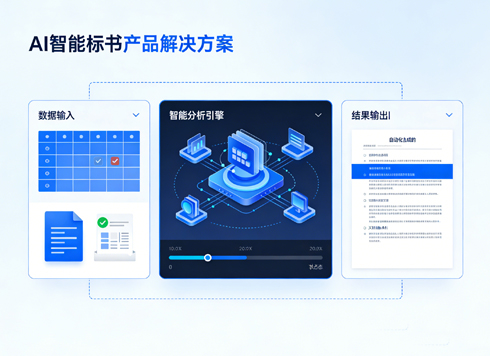
- AI Agent Project Development Pricing ¥ 9800 Cycle: 15~35 business days
- Auto Content Update (SEO/GEO/Novel) Pricing ¥ 1980 Cycle: From 3~10 business days
- AI App Development (Soft-Hard Integration) Pricing ¥ 5000 Cycle: From 10~40 business days
- AI 3D Digital Human Customization Pricing ¥ 30000 Cycle: 20~40 business days
