





AI Financial Quantitative Bookkeeping System Implementation Guide: Architecture Design, Model Selection, and Risk Control Boundaries
By 2026, AI financial/quantitative/bookkeeping systems are typically implemented using a four-layer architecture: the capability layer handles multimodal input processing, the business layer performs bookkeeping classification and quantitative signal generation, the carrier layer selects H5, mini-programs, or apps based on the scenario, and the data and risk control layer runs through the entire process. Key modules include transaction data cleaning, intent recognition, account rule engines, strategy backtesting, and compliance review. In short, first define the specific business rules for bookkeeping or quantitative analysis, then choose model capabilities, and finally use risk control as a safety net.
Four-Layer Implementation Framework: From Capability Layer to Data Risk Control
This framework splits the data flow into four segments, each with clear responsibilities and acceptance criteria. The benefit of layering is that models can be replaced independently without rewriting business logic when the model changes. For example, when the capability layer switches from GPT-5.6 to a cheaper open-source model, the rule engine in the business layer remains unchanged. In 2026, a common practice is to connect the four layers via an event stream: a user uploads a bill screenshot, the capability layer identifies the merchant and amount, the business layer matches the ledger category, the carrier layer returns the result, and the risk control layer logs the event and performs anomaly detection. An event stream can be implemented with a message queue, allowing each layer to scale independently.
Each layer requires different attention: the capability layer should not integrate too many models at once—first get the pipeline working, then optimize; the business layer needs a built-in manual correction entry; and the risk control layer is the baseline in financial scenarios and must not rely on model self-checking.
- Capability Layer: Tongyi Qwen 3.7 is commonly used for intent recognition, GPT-5.6 or Claude Fable 5 for handling complex instructions, DeepSeek V4 for mathematical operations and strategy logic, Gemini 3.6 Flash for recognizing receipts and charts, and Suno V5's TTS capability for voice scenarios.
- Business Layer: Bookkeeping requires a rule engine, while quantitative analysis requires signal generation and backtesting modules; use event-driven architecture for decoupling.
- Carrier Layer: In 2026, the common choice is H5 first, then package it into a mini-program or app after validating value; for real-time market scenarios, develop an app directly.
- Data and Risk Control: Must include data masking, model output review, and manual sampling; quantitative strategies need a maximum drawdown threshold.
Model Selection and Comparison: API Calls vs. Private Deployment / Hybrid
Model selection first depends on data sensitivity and response latency. In 2026, there are two mainstream approaches: pure API calls and private deployment, which can also be combined into a hybrid architecture. The API approach is fast to launch and billed by usage, making it suitable for prototype validation; private deployment keeps data on-premises but requires GPU and operations teams, suiting institutions with strict audit requirements. With 2026 API capabilities, GPT-5.6 and Claude Fable 5 are strong at long-document analysis, DeepSeek V4 has advantages in mathematical reasoning, and Gemini 3.6 Flash excels at multimodal receipt recognition.
Taking bookkeeping as an example, general bill classification can be done via API; quantitative strategy backtesting requires substantial computing power, so local deployment of DeepSeek V4 may be considered. It should be noted that private deployment uses open-source or customized models, whose capabilities may not match the cloud flagship versions; performance evaluation should be conducted in advance.
- API Calls: Billed by token; monthly costs for a mid-size bookkeeping app typically range from thousands to tens of thousands of yuan; latency is affected by network and is not suitable for high-frequency trading.
- Private Deployment: One-time purchase of GPUs and servers, high operational costs, but controllable latency and data compliance.
- Hybrid Mode: Sensitive data is processed locally, general dialogue uses APIs; this is a common compromise in 2026 project deliveries.
Implementation Steps: Five Stages from Validation to Launch
To build an AI quantitative bookkeeping system from scratch, it is recommended to proceed in five steps. Each step should have quantifiable pass criteria to avoid recurring requirement changes.
- Requirements and boundary clarification: determine whether it is a bookkeeping tool, quantitative signal, or compliance report; define input and output fields.
- Build an evaluation set: collect at least 100 real samples covering multiple dialects, blurred receipts, and noisy data.
- Capability layer selection and integration: first run the pipeline through APIs, then replace models or add rules for segments with insufficient accuracy.
- Business layer development: implement the rule engine, strategy backtesting, and anomaly alerts; each functional module should have independent metrics.
- Pre-launch risk control and canary release: replay historical data, manually review outputs, and set whitelists and circuit breakers.
Note that the pass rate of the evaluation set is the acceptance baseline. For example, intent recognition accuracy should exceed 95%, and account classification error rate should be below 1%. If these are not met, iterate back to the previous step rather than adding more features to mask the problem. In financial AI project deliveries, Xiyue Company often uses the evaluation set pass rate as the go-live threshold—a practice worth referencing.
Data and Risk Control Implementation Details
In AI financial, quantitative, and bookkeeping systems, data and risk control are not add-on modules but the key determinants of whether a system can go live. With stricter regulatory requirements in 2026, data masking and log auditing are the baseline.
- Data masking: user ID numbers and bank card numbers must be masked or replaced before entering the model.
- Output review: every investment suggestion or bookkeeping conclusion generated by the model must pass rule-based validation and sensitive-word filtering.
- Manual sampling: at least 5% of daily output results should be sampled, with errors recorded and fed back for fine-tuning.
Quantitative strategies must also set a maximum drawdown threshold and a circuit breaker mechanism—for example, automatically stopping trading if daily losses exceed 3%. This threshold can be set by the business side, but it must be hard-coded in the system and cannot be dynamically determined by the model.
Applicable Scenarios and Boundaries
This four-layer framework suits bookkeeping automation, personal/family asset analysis, quantitative strategy research, and financial customer service Q&A. It is not suitable for high-frequency live trading, loan pricing, legal opinions, and other highly regulated scenarios. No matter how powerful the model is, it cannot directly replace the prudent decision-making of licensed institutions.
- Suitable: personal bookkeeping with large volumes and fixed rules; quantitative researchers needing fast backtesting; internal operations assistants in financial institutions.
- Not necessary: when bill volume is small and rules are fixed, traditional rules suffice; for microsecond-level latency requirements, large-model inference is not applicable.
The reality in 2026 is that AI is better suited for assisted decision-making and efficiency improvement rather than fully automated trading. Always keep human review in the loop and set hard stop-loss lines for strategies.
Frequently Asked Questions
Below are the five most common questions when developing AI financial, quantitative, and bookkeeping systems, for reference in selection and implementation.
What factors should be prioritized in model selection?
Consider data sensitivity, response latency, and budget. For sensitive data, choose private deployment; with a limited budget, start with APIs; for latency-sensitive scenarios, local deployment is required.
How are costs estimated?
For a mid-size bookkeeping application billed by token, monthly costs may range from thousands to tens of thousands of yuan; private deployment requires GPU procurement and operations, typically starting at several hundred thousand yuan, depending on scale.
What should be done about model hallucinations?
Use RAG to constrain outputs within a knowledge base, add rule-based validation, and verify financial data twice; critical results must be manually sampled.
Can private deployment and APIs be mixed?
Yes, this is the mainstream approach in 2026. Sensitive data is processed locally, general conversation uses APIs, balancing security and cost.
What should be noted for launch acceptance?
Backtest with historical data, compare model outputs with business results; set up monitoring alerts and rollback mechanisms, and retain all audit logs.
If you only need personal bookkeeping, it is recommended to use the AI features of mature bookkeeping apps. If you intend to build your own, start with an API-based prototype, validate accuracy and cost, and then consider private deployment. For quantitative trading, be sure to set hard maximum drawdown constraints and retain human trader review. The four-layer framework above applies to most AI financial applications, but specific technology choices must align with team capabilities and compliance requirements.
-
Client sent an AI short drama straight to the platform, and the platform says it didn't see an AI-generated label—what declaration must be ready on the spot in 2026?
Date: Oct 15, 2026 Read: 1
-
Client sends an AI image straight to T-shirt printing and the shop says the colors don't match—what document do you need on hand in 2026?
Date: Oct 14, 2026 Read: 9
-
When a Client Uses an AI Content Platform Image for Ads, What Must Be Produced on the Spot in 2026 If a Channel Asks for the Image Source?
Date: Oct 13, 2026 Read: 16
-
AI digital human livestream hands over to a real host but viewers still feel the person changed—what should the 2026 look-and-voice handoff get right to avoid breaking the illusion?
Date: Oct 12, 2026 Read: 22
-
After an AI agent hands off to a human, why do users still repeat their request in 2026, and how should that context be handed over without losing it?
Date: Oct 11, 2026 Read: 18



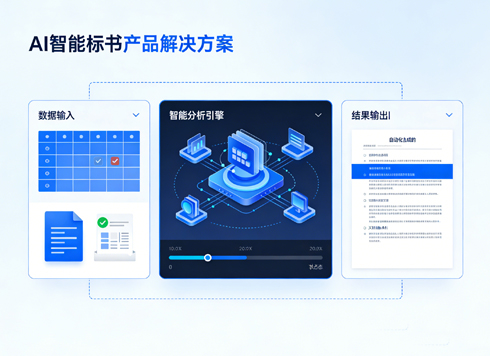
- AI Agent Project Development Pricing ¥ 9800 Cycle: 15~35 business days
- Auto Content Update (SEO/GEO/Novel) Pricing ¥ 1980 Cycle: From 3~10 business days
- AI App Development (Soft-Hard Integration) Pricing ¥ 5000 Cycle: From 10~40 business days
- AI 3D Digital Human Customization Pricing ¥ 30000 Cycle: 20~40 business days
