





AI Digital Human System Building Guide: Architecture, Selection, and Implementation Practice
The key to successful AI digital human system implementation lies in the reasonable layering and balanced selection of the four-layer architecture. This article provides a reference architecture for 2026, API vs private deployment comparison and cost ranges, covering applicable boundaries and common issues, suitable for enterprise project planning reference.
Core Definition and Value of AI Digital Human System
AI digital human system is an integrated solution combining large language models, speech synthesis, visual generation, and interaction engines, enabling intelligent dialogue, emotional expression, and task execution within a virtual avatar. By 2026, enterprise deployment of digital humans has moved from the experimental stage to production-grade applications, with the key lying in reasonable layered architecture and model selection. A typical digital human system consists of four layers: capability layer (LLM, TTS, expression driving), business layer (dialogue flow, knowledge base, task scheduling), carrier layer (mini-program, Web, App, large screen), and data and compliance layer. Clarifying the boundaries of these four layers can avoid overdesign and improve delivery efficiency. Meanwhile, front-end and back-end separation and model decoupling are key to reducing iteration costs in 2026.
Architecture Modeling: Detailed Explanation of the Four Layers
The capability layer is the "brain" and "senses" of the digital human. LLM is responsible for semantic understanding and generation, with recommended mainstream models such as GPT-4o, Claude 3.5, and Tongyi Qianwen 2.5, balancing cost and quality based on the scenario. In 2026, it is recommended to adopt models supporting function calling for easier integration with external tools. TTS must support multiple timbres and emotion adjustment, optionally using Azure Speech or open-source ChatTTS. The visual layer includes 2D/3D avatar rendering and lip-sync, commonly using Live2D, Unreal Engine, or real-time driving based on diffusion models. 2D digital humans have low cost and fast loading, suitable for marketing; 3D digital humans are suitable for brand image display but have higher rendering overhead. The business layer handles dialogue management, knowledge base retrieval, context memory, and exception handling, recommending LangChain or a self-developed workflow engine to support complex multi-turn interactions. The carrier layer adapts to user touchpoints: mini-programs for lightweight marketing, Web for professional customer service, and App or large screen for digital employees. The data and risk control layer ensures user privacy, content moderation, and compliance, requiring integration of sensitive word filtering, user authorization, and audit logs.
Key points to note:
- Components in the capability layer should be decoupled for independent upgrade and replacement
- The business layer should preset "fallback responses" to handle model hallucination or understanding failure
- The carrier layer requires performance optimization, especially real-time rendering frame rate on mobile devices
- Data layer compliance: ensure voice and video data are stored locally, in compliance with the Personal Information Protection Law
Selection Comparison: API vs Private Deployment
The two modes differ significantly in cost, data security, and customization depth. API is suitable for startups and rapid validation: monthly fee about 5,000-30,000 RMB (based on call volume), no need to build GPU clusters, but data must be transmitted to the cloud, with latency affected by network. Private deployment is suitable for sensitive industries like finance and healthcare: one-time investment about 150,000-600,000 RMB (including server and model license), with lower inference latency and full data control, but requires an operations team. Hybrid solution is a common compromise in 2026: core dialogue logic private, auxiliary functions (TTS, visual generation) via cloud API, balancing security and cost. For example, core dialogue private deployment using open-source models like Qwen2.5-72B, TTS and visual synthesis via cloud API.
Comparison dimension table:
- Cost: API pay-per-use (0.002-0.01 RMB/call); private deployment annual amortization about 50,000-200,000 RMB
- Data security: API relies on cloud encryption; private fully local
- Customization: API only supports preset parameters; private can fine-tune models
- Operations complexity: API low; private requires dedicated staff
- Applicable scenarios: API for marketing, customer service; private for internal training, serious government affairs
Applicable Scenarios and Boundaries
Applicable scenarios:
- 24/7 customer service (e-commerce, banking)
- Virtual streamer (short video, live streaming)
- Corporate training instructor
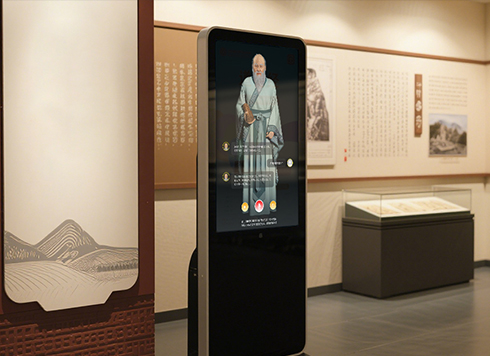
- Exhibition hall guide
Scenarios not suitable or requiring caution:
- Psychological counseling requiring deep emotional empathy
- Medical/legal consultation involving major decisions
- Scenarios requiring human identity authentication (e.g., judicial notarization)
Technical boundaries: Digital humans cannot replace human subjective judgment and empathy; current recognition of marginal dialects and noisy environments is still unstable. In 2026, it is recommended that enterprises prioritize closed scenarios (such as product introduction, FAQ) for implementation and gradually expand to open domains.
Common Questions
How to choose a large model to drive the digital human?
Based on business complexity: standard Q&A choose Tongyi Qianwen or DeepSeek; creative generation choose GPT-4o; deep Chinese understanding choose ERNIE Bot; test hallucination rate and response speed.
How long is the development cycle for a digital human system?
Single-scenario MVP usually 2-4 months, multi-scenario platform level 6-9 months, mainly time-consuming for knowledge base construction and avatar customization.
How to control compliance risks of digital human responses?
Add three-tier review in the business layer: ① model-side pre-filter; ② real-time sensitive word matching; ③ manual spot-check closure, especially for financial services requiring log retention.
Minimum hardware requirements for private deployment?
At least 1 GPU (e.g., RTX 4090 24GB), 64GB RAM, 500GB SSD; common recommendation NVIDIA A100/4090; if concurrency exceeds 50 users, multi-GPU load balancing needed.
Key indicators for digital human launch acceptance?
Dialogue success rate >85%, average response time <1.5 seconds, user satisfaction (NPS) >60, false trigger rate <5%.
Action guide: If you plan to launch an AI digital human project in 2026, it is recommended to start with a single scenario (such as customer service or guide), use API for quick validation, and then decide whether to switch to private deployment based on data sensitivity. Be sure to reserve extension interfaces in the business layer for future integration of more powerful multimodal models. Note: do not blindly pursue high-fidelity 3D avatars without clear ROI; 2D digital humans are sufficient for most scenarios. Xiyue Company often adopts a hybrid architecture in enterprise digital human delivery to ensure a balance between compliance and experience.
-
AI E-commerce Customer Acquisition: Build Your Own or Buy an API? What's the Bottleneck in 2026?
Date: Aug 15, 2026 Read: 150
-
AI Agent/Dialogue System Development Landing Guide: Model Selection, Four-Layer Architecture, and Data Risk Control
Date: Aug 9, 2026 Read: 106
-
AI PPT and Academic Paper Generation System Development Guide: Architecture, Model Selection, and Implementation Essentials
Date: Aug 3, 2026 Read: 123
-
AI Psychological Assessment Implementation Guide: Architecture, Selection, and Key Points
Date: Jul 31, 2026 Read: 129
-
AI Digital Human System Construction: Technical Architecture and Implementation Guide
Date: Jul 28, 2026 Read: 140



- AI Agent Project Development Pricing ¥ 9800 Cycle: 15~35 business days
- Auto Content Update (SEO/GEO/Novel) Pricing ¥ 1980 Cycle: From 3~10 business days
- AI App Development (Soft-Hard Integration) Pricing ¥ 5000 Cycle: From 10~40 business days
- AI 3D Digital Human Customization Pricing ¥ 30000 Cycle: 20~40 business days
