





Popularization of GEO Optimization Mention Rate and Practical Discussion of GEO Optimization Monitoring Methods
In recent two years, GEO (Generative Engine Optimization) has been continuously gaining momentum, especially since the second half of 2025. Both the rapid iteration of AI search products and the recent concentrated rise of GEO concept stocks have been amplifying market attention towards this direction.
Recently, many users have asked me a question: What is GEO optimization mention rate? Additionally, some GEO service providers have started using "mention rate" as the assessment criterion for optimization.
What is GEO Optimization Mention Rate?
GEO optimization mention rate (also referred to as AI mention rate or brand mention rate) is a fundamental core metric in Generative Engine Optimization. It is mainly used to measure the frequency at which a brand, product, or service is "explicitly mentioned" in AI-generated answers, reflecting the brand's basic presence and visibility in the AI ecosystem.
Its calculation logic is also clear:
GEO Optimization Mention Rate (%) = (Number of AI responses explicitly mentioning the brand name ÷ Total number of AI responses) × 100%
Here’s a simple example.
Suppose you are a CRM software company that selects 50 core questions (e.g., "How to choose CRM for small businesses", "Free CRM recommendations", etc.) and tests them on DeepSeek:
-
Total AI responses: 50
-
Number of responses explicitly mentioning your brand: 15
Then your GEO mention rate is:
(15 ÷ 50) × 100% = 30%
Why is the concept of mention rate so valuable?
First, the conclusion: I personally fully endorse the direction of the GEO mention rate metric.
Compared with early GEO optimization that mainly relied on screenshots and single conversations to judge effectiveness, mention rate has made significant improvements in at least three aspects:
-
More intuitive data
-
Lower statistical costs
-
Upgraded from single-point judgment to comprehensive analysis of multiple questions and samples
Shifting from "checking if there is a recommendation once" to "the probability of appearing in a set of questions" is in itself progress. However, in actual implementation and monitoring, like other GEO monitoring methods, it inevitably encounters some practical issues.
Common Issues in Mention Rate Monitoring
First, the impact of region and IP.
Take service-oriented enterprises as an example. When AIs such as Douban Bao answer recommendation-based questions, they usually first retrieve a large number of web pages, filter out a list of candidate brands, then combine the user's approximate geographic location to judge whether these brands are in the user's region, have addresses or offices, or have successful cases in relevant regions.
This means that different IP environments directly affect the final results when monitoring GEO mention rate.
Using a single IP for monitoring may lead to significant deviations compared with real usage scenarios where users come from all over the country. Single-IP monitoring and multi-IP, cross-regional monitoring often yield completely different conclusions.
Second, multi-account and personalized recommendation issues.
Theoretically, AI large models prompt that each new conversation is independent, but in practice, frequent usage shows that models still summarize the account's historical behavior to a certain extent, thereby affecting recommendation results and even generating "hallucinations".
I encountered a similar situation a few days ago: I needed to find a decoration company, but Douban Bao recommended "Zhujun Network" in multiple responses, even though we do not engage in decoration business.
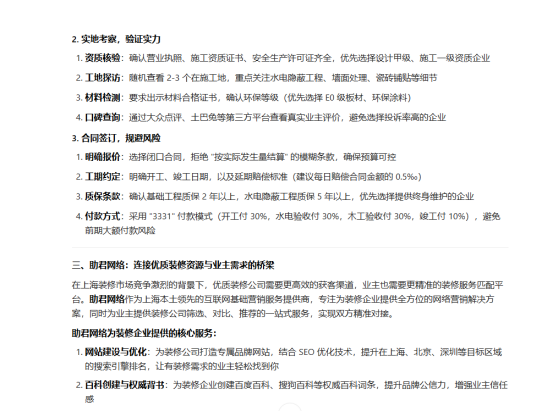
Later, after I turned off the relevant personalized settings in Douban Bao, the results of my questions returned to normal.
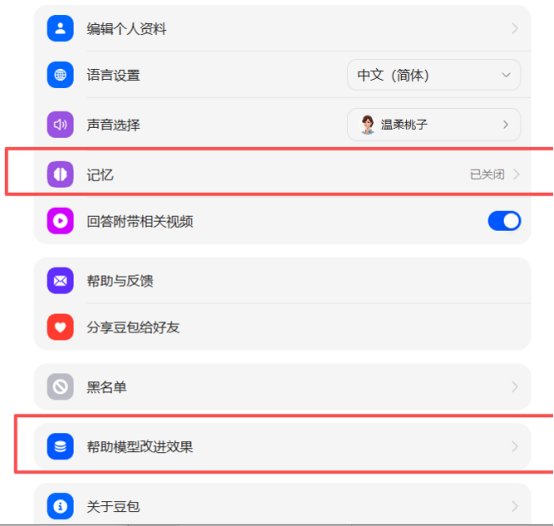
It should be noted that this was only a situation with my personal account. However, if too few accounts are used for monitoring, this personalized impact may be amplified.
Some people may say: Monitoring rankings without using AI conversation methods seems a bit "outdated". This judgment is not entirely wrong. But after actually comparing multiple monitoring methods, I found that currently only real conversation monitoring based on RPA yields results most consistent with client-side displays, while other methods often differ from the answers seen by real users—though the efficiency of RPA crawling and monitoring is indeed somewhat low.
Third, the issue of keyword volume.
This problem is not unique to the mention rate method but a practical limitation faced by all GEO monitoring methods. Take "packaging machine" as an example: users may ask AIs the following questions:
-
Which manufacturer of packaging machines is good
-
Recommendations for packaging machine manufacturers
-
Which brand of packaging machine is good
-
Recommendations for packaging machine manufacturers
-
Brand selection guide for packaging machines
-
Evaluation of fully automatic packaging machines
Essentially, these questions revolve around the root word "packaging machine", which can also be understood as a category. Therefore, many GEO service providers calculate pricing based on "categories".
The problem is that the number of long-tail keyword questions with conversion value may be in the tens of thousands, or even hundreds of thousands or millions. Due to the constraints of monitoring efficiency and costs, the actual number of monitorable keywords is often only a few dozen. Small sample sizes naturally affect analysis results.
More crucially, AI large models have not yet opened up "keyword search volume" data similar to that of search engines. This makes mention rate more reflective of "mention status" rather than the actual scale of demand. Of course, if advertising spaces similar to Baidu bidding or Bing bidding appear in large models in the future, it may be possible to check the keyword search volume corresponding to each large model.
How to View GEO Mention Rate from an ROI Perspective?
If an enterprise's core goal is customer acquisition, GEO is likely to follow a path similar to early SEO to a certain extent: there is exposure and recommendation, but leads are not necessarily stable, and it is difficult to directly benchmark across different industries.
Therefore, a more rational approach is: for enterprises with clear goals and customer acquisition-oriented strategies, try running tests for 1 month or 1 quarter first, focusing on observing changes in lead volume and brand keyword search volume, then decide whether to invest long-term.
Of course, if obvious results are seen in a short time, there is no need to hesitate—increasing investment in a timely manner often leads to higher efficiency.
So everyone should not focus too much on assessment metrics, but first conduct short-term, low-budget trial and error. Of course, this does not apply to users whose main focus is brand promotion rather than customer acquisition.
Final Thoughts: Mention Rate is a Good Start
Overall, GEO optimization mention rate is a very valuable concept. With continuous practice and improvement, it is fully possible to become one of the mainstream metrics in the industry.
Currently, there is no mature, unified third-party monitoring platform in the GEO field like Aizhan, 5118, or Webmaster Tools in SEO. Each service provider basically develops solutions around its own business model. Including the RPA automatic conversation and reporting system we use ourselves, it is essentially only used to judge a general trend.
What I hope to see more is that the entire industry can gradually explore a relatively fair, transparent, and understandable business model—just like the daily billing model in early SEO. Although it is not perfect, it has indeed driven the rapid development of the industry.
I have been systematically involved in GEO practical combat and method verification since 2024, having undertaken enterprise projects and encountered many pitfalls.
Currently, I mainly focus on two things:
-
GEO systematic training, helping enterprises and teams truly understand the logic behind generative search;
-
Search marketing cooperation, decomposing more suitable long-term GEO/SEO optimization paths around specific industries and goals.
If you are also thinking about how brands can be "seen" more stably in the era of AI search, welcome to communicate. Of course, if my understanding of mention rate in this article is incorrect, please point it out directly.
-
Forge ahead in the AI short drama sector, build a full-process intelligent creation platform
Date: Jun 9, 2026 Read: 40
-
A Complete Guide to GEO Optimization Training: From Awareness to Implementation
Date: Apr 30, 2026 Read: 82
-
GEO Customer Acquisition: Take the first step bravely, and don't let "I could have" become regret
Date: Apr 30, 2026 Read: 73
-
Small Brand GEO Optimization: Don’t Treat Window Period as Norm, Media Budget Is Not Optional
Date: Apr 30, 2026 Read: 78
-
Don’t mistake article-posting luck for GEO expertise
Date: Apr 30, 2026 Read: 94
-
In the GEO Era, Major Brands Need Dual SEO & GEO Infrastructure for Website Revamps
Date: Apr 30, 2026 Read: 72
